
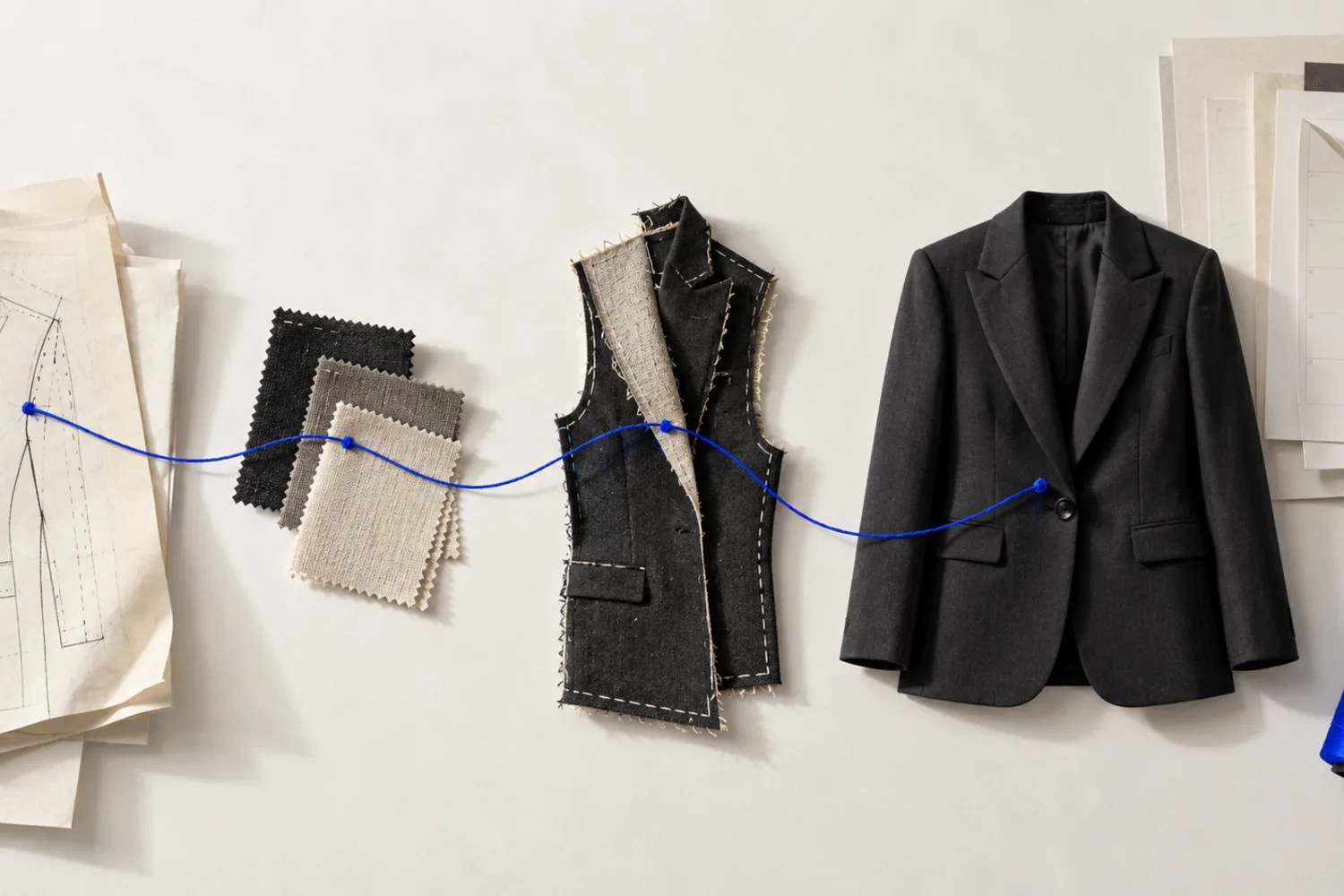
Key takeaways
- A prototype proves construction; a fit sample proves measurements and balance.
- A size set checks grading, not only the base size.
- A pre-production sample must use bulk materials, trims and production methods.
- Bulk starts only after open comments are closed in writing.
The sample sequence
| Sample | Purpose | Do not use it to approve |
|---|---|---|
| Prototype | Construction, proportions, feasibility | Final colour or bulk workmanship |
| Fit sample | Balance, measurements, movement | Full grading without a size set |
| Salesman / photo | Presentation, selling, content | Bulk production if materials differ |
| Size set | Grading across selected sizes | Unseen sizes outside the tested set |
| PPS | Final production standard in bulk inputs | Changes that remain undocumented |
How many rounds
Simple products may reach approval in one or two fit rounds. Tailoring, footwear, engineered knitwear and new materials often require three or more. The number is driven by novelty, construction and decision quality—not prestige.
Combine comments from design, technical, production and commercial teams into one numbered document. Conflicting messages create an extra round even when the factory executed correctly.
Approval record
- Sample ID, date, factory and material lot.
- Measurement table with actual values and tolerances.
- Photos of fit, construction and defects.
- Comment status: change, accept, confirm in next sample or verify in bulk.
- Approved artwork, colour, trims, labels and packaging.
- Name and date of the decision owner.
Bulk release
Release bulk only when PPS, BOM, measurement chart, colour standard, label placement, packaging and delivery calendar agree. If an item remains open, identify who will verify it and at what production stage.
ControlKeep one sealed approved sample with the brand and one with the factory. Both must carry the same approval reference.